OVERVIEW

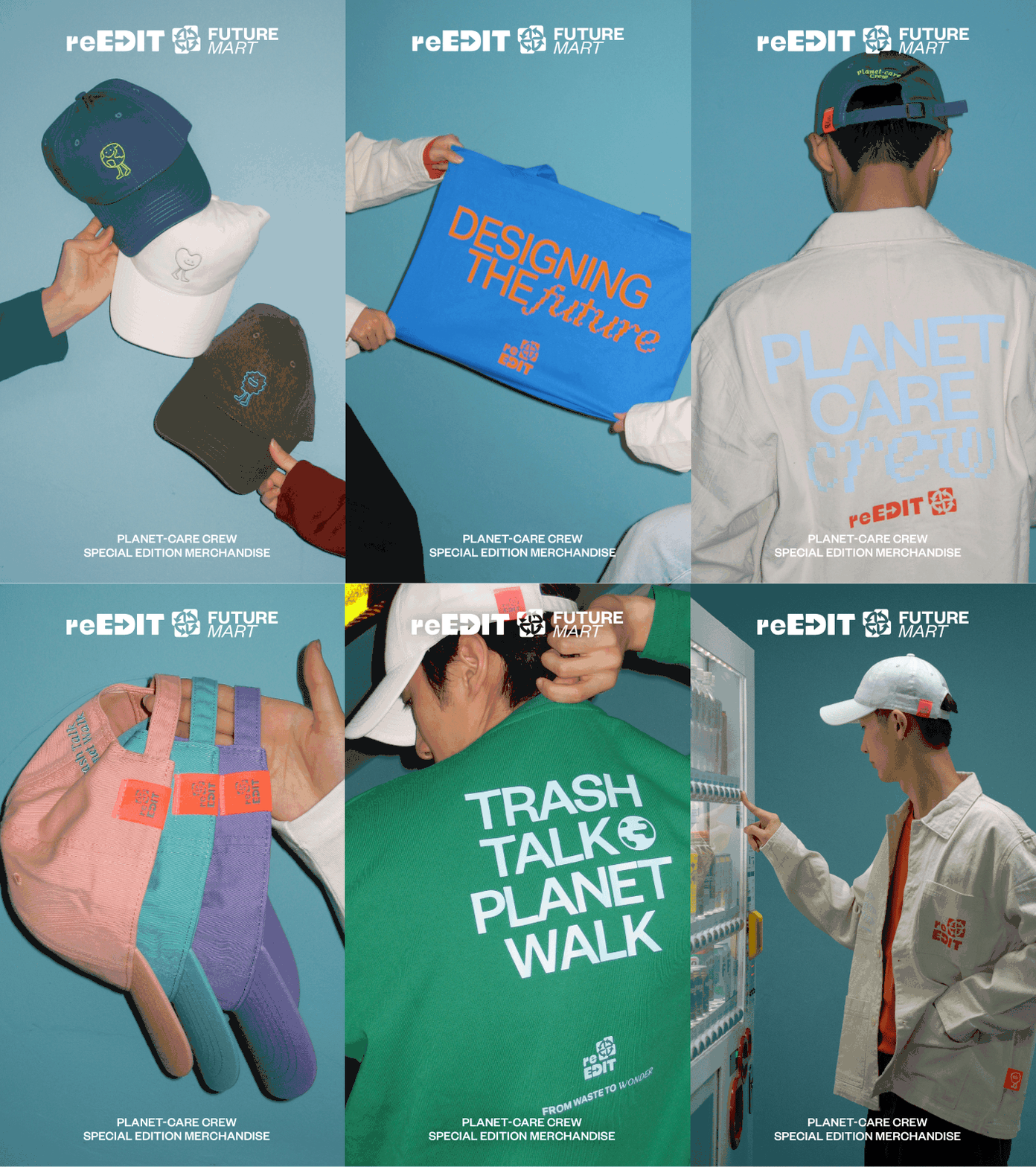
reEDIT is a circular design platform reimagining how people experience sustainability. Instead of treating recycling as the end of a product's life, reEDIT transforms discarded materials into desirable products, retail experiences and community initiatives that celebrate creativity, craftsmanship and circular innovation. The project involved creating a scalable brand ecosystem spanning retail, e-commerce, packaging, social media, educational initiatives and future sub-brands.

CLIENT

reEDIT by EDITECTURE

YEAR

2026

DELIVERABLES

Brand Strategy Brand Identity System Packaging Design Content Strategy & Social Media Creative Content Production Retail Experience & E-commerce PR & Brand Communications
PROJECT OBJECTIVES

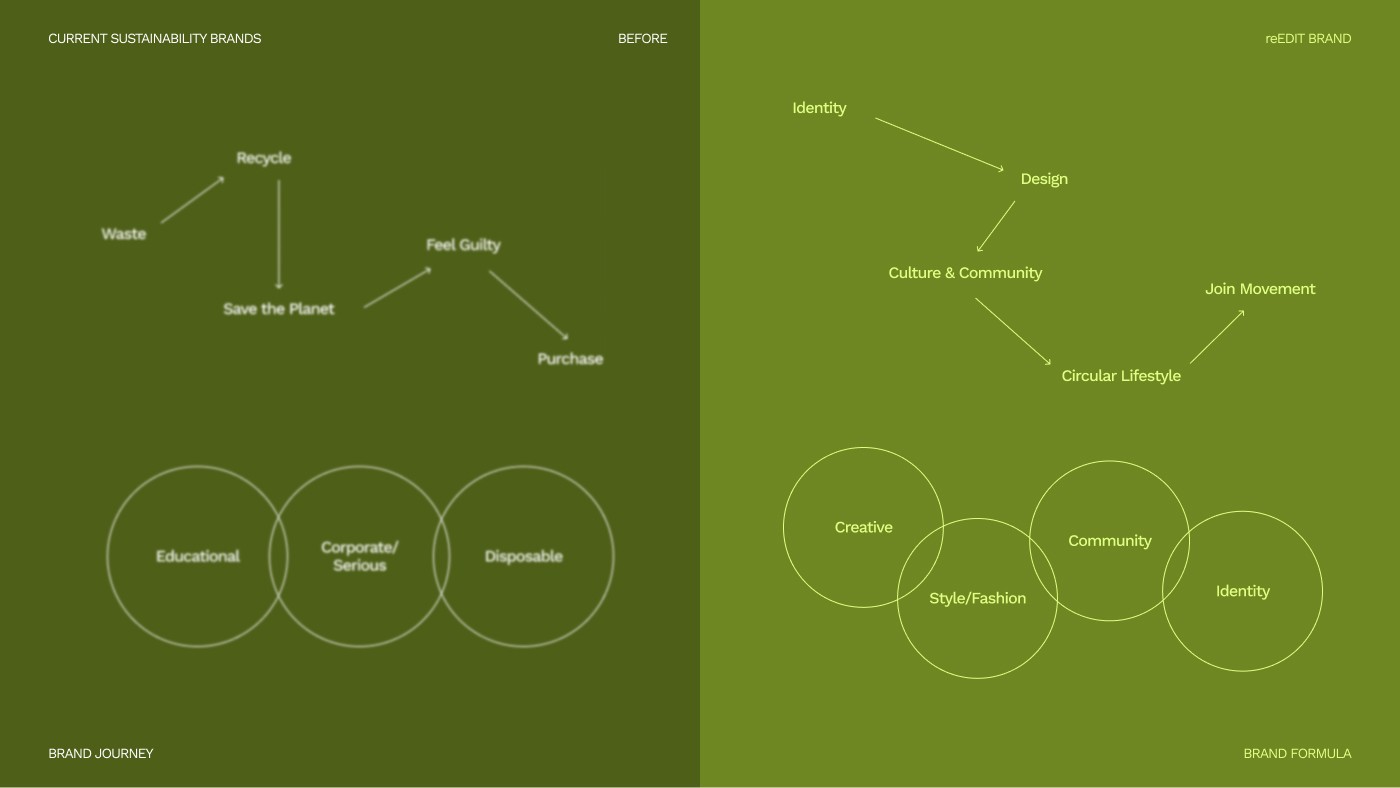
Sustainability brands often face the same problem. They communicate responsibility. But consumers buy aspiration. Many circular economy brands rely on environmental messaging, statistics and guilt to encourage behavioural change. While meaningful, this often limits their appeal beyond environmentally conscious audiences. Our opportunity wasn't to build another sustainability brand. It was to create a lifestyle platform where circularity becomes part of culture. Rather than looking "eco," the brand deliberately borrows cues from fashion, technology and cultural institutions.

Sustainability brands often face the same problem. They communicate responsibility. But consumers buy aspiration. Many circular economy brands rely on environmental messaging, statistics and guilt to encourage behavioural change. While meaningful, this often limits their appeal beyond environmentally conscious audiences. Our opportunity wasn't to build another sustainability brand. It was to create a lifestyle platform where circularity becomes part of culture. Rather than looking "eco," the brand deliberately borrows cues from fashion, technology and cultural institutions.

BRAND COLLABORATIONS

Sustainability brands often face the same problem. They communicate responsibility. But consumers buy aspiration. Many circular economy brands rely on environmental messaging, statistics and guilt to encourage behavioural change. While meaningful, this often limits their appeal beyond environmentally conscious audiences. Our opportunity wasn't to build another sustainability brand. It was to create a lifestyle platform where circularity becomes part of culture. Rather than looking "eco," the brand deliberately borrows cues from fashion, technology and cultural institutions.

Sustainability brands often face the same problem. They communicate responsibility. But consumers buy aspiration. Many circular economy brands rely on environmental messaging, statistics and guilt to encourage behavioural change. While meaningful, this often limits their appeal beyond environmentally conscious audiences. Our opportunity wasn't to build another sustainability brand. It was to create a lifestyle platform where circularity becomes part of culture. Rather than looking "eco," the brand deliberately borrows cues from fashion, technology and cultural institutions.